
Issue #54

Beware the Icy Lump
Years ago my friend Danny made a list of seven life lessons that he shared with his teenaged sons before they went off to college, one lesson a day for seven days. He deserves a parenting prize for that, and methinks his own Restless Egg issue as well; but for today, I’m going to look at just one of his lessons and turn it to my purposes. Some time after talk of tumbleweeds and before library books (okay, definitely going to have to devote an issue to this), Danny told his boys, “You are your friends.” In other words, the people you hang out with will influence and change you, so choose friends carefully.
I’ve been thinking about this adage because I’ve been hanging out with an unpleasant crew, and the association is making me unpleasant too—peevish and slightly glum. My new friends are selfish, vengeful, foolish, violent, judgmental, weak, cruel and prone to damning each other to hell. They live in old, dank houses that match their moods, houses with names like Thrushcroft Grange and Wuthering Heights. Yes, I’m speaking of Heathcliff, Catherine, Nelly, Joseph, Hindley, young Linton, Hareton, and Cathy— a twisted crew sprung from Emily Bronte’s brilliant and deeply weird mind. Oh, I did enjoy my time with them! I loved it, they were wildly entertaining. I’ll remember the hours I spent listening to Michael Kitchen’s narration of Wuthering Heights as a peak “reading” experience.
But it did darken my days.
I felt the same after reading Hunter S. Thompson’s Fear and Loathing in Las Vegas and after watching shows like Succession, Girls, White Lotus and a single episode of Yellowstone. As fun as it can be to watch bad people behave badly—much more interesting than watching good people behave virtuously—after a time I need to pull myself away and decompress, re-orient myself to the real world, remind myself that what I’m consuming is only one particular writer’s sour vision, not the final word on human existence.
Back in pre-Spotify days, a friend liked to gift me homemade CD’s she’d burned. During one period when she was feeling blue, she gave me CD after CD of mournful singer/songwriter tracks that gave her solace and me a headache. This went on for a few weeks. Then one day she seemed lighter. She told me that her daughter had gotten frustrated with her low spirits and had thrown up her hands and said, “Mom, just stop listening to sad music!” We both laughed, it seemed so obvious. The music that matched her mood was—to some extent—creating her mood.
This idea that something external, be it bad friends or sad music, can shape the internal finds perfect expression in Hans Christian Anderson’s fairy tale “The Snow Queen.” As a child that story disturbed me, and I still don’t like it—it’s part sugary excess, part existential terror, and part heavy-handed sermonizing. With frightening illustrations.
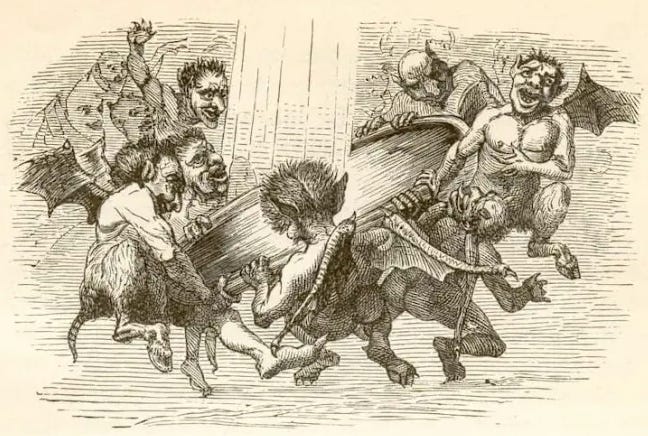
The story begins with a hobgoblin who makes a looking glass that distorts reality and makes it ugly:
. . . he had made a mirror with the power of causing all that was good and beautiful when it was reflected therein, to look poor and mean; but that which was good-for-nothing and looked ugly was shown magnified and increased in ugliness. In this mirror the most beautiful landscapes looked like boiled spinach, and the best persons were turned into frights, or appeared to stand on their heads; their faces were so distorted that they were not to be recognized; and if anyone had a mole, you might be sure that it would be magnified and spread over both nose and mouth.
Meanwhile angelic playmates Kay and Gerda frolic innocently in summer landscapes, holding hands and singing hymns. They are so annoyingly sweet they actually kiss roses.
Trouble begins when the goblin’s mirror breaks into a million pieces and falls from the sky. When a shard lands in Kay’s eye, he becomes aggressive and cruel. He sees worms in the roses, kicks over flower boxes, and says mean things to Gerda when she cries. Then he is abducted by the Snow Queen who kisses him till an icy lump forms in his heart. She takes him to her kingdom in the wintry north where he is cold and unhappy and entirely forgetful of his former life.
Gerda is heartbroken and endures many trials to find Kay. Finally she reaches the Snow Queen’s icy palace and sees her old playmate nearly black with cold. He makes no sign of recognition. When she cries, her tears melt the ice in Kay’s heart, and when she sings their old favorite hymn, Kay cries so hard the splinter falls out of his eye—and we’re back to kissing roses.
What scared me about this fairy tale when I was little was the complete erasure of identity. Sweet Kay becomes malicious Kay, and were it not for Gerda’s super-human heroics, Kay would sit in the frozen palace till he died. Does that sound like the effects of binge-watching reality TV? Cynical movies? Mocking, heartless banter on social media?
Being amused by awful people a little here and a little there is all good fun, but too much of it and all the time—Danny’s dictum applies. Our vision is distorted and we distort ourselves. Gerda may come but we won’t even want to see her, so addicted we become to ugliness.
I’m not advocating for shielding oneself from bad news or ignoring the suffering of other people. That’s a pinched and less-than-human existence. I’m just saying that for all the Heathcliffs and Snow Queens and hobgoblins in the world—and they are there—there is goodness too. And goodness needs to be noticed so it can be emulated.
Ah look at me, sermonizing like old Anderson himself!
*
Hang Around With a Really Good Guy Instead
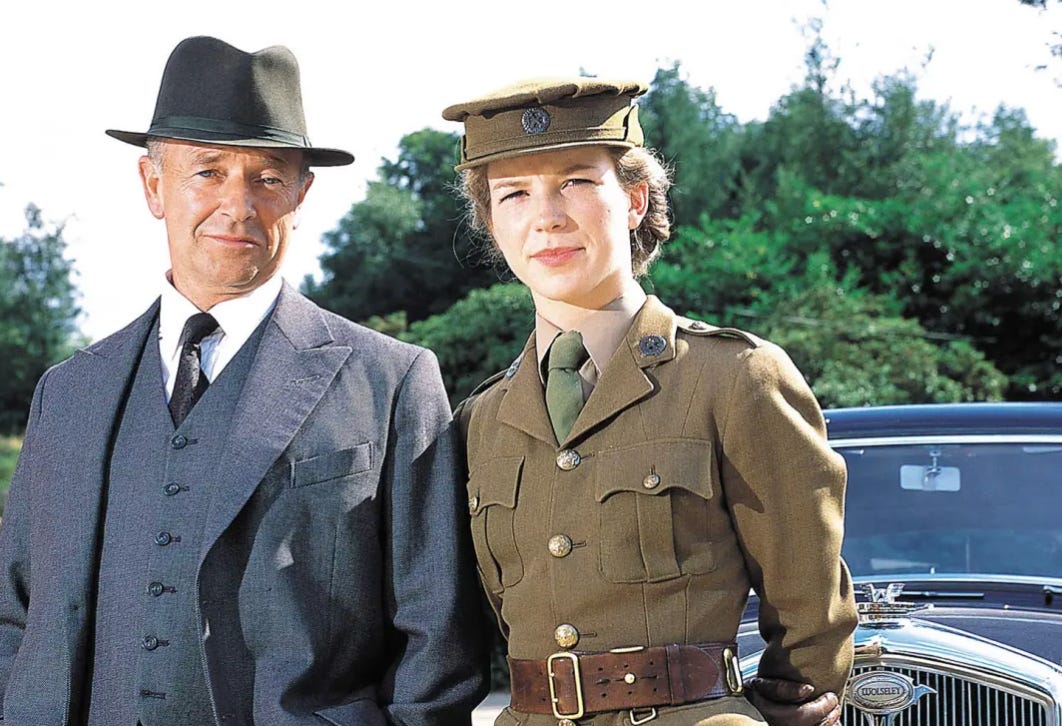
Michael Kitchen, the narrator of the Wuthering Heights book I listened to, has been a favorite of mine since I watched him in the long-running series Foyle’s War. If you’re looking for a show to binge, and you like period drama and a little bit of murder, this is for you. The quietly upstanding Detective Christopher Foyle and his plucky driver Samantha Stewart track down traitors, black market thieves and murderers in a coastal town on the English Channel during WWII. Crime writer Antony Horowitz created the show and based many of the plots on historical events.
*
Singing Alone, Together
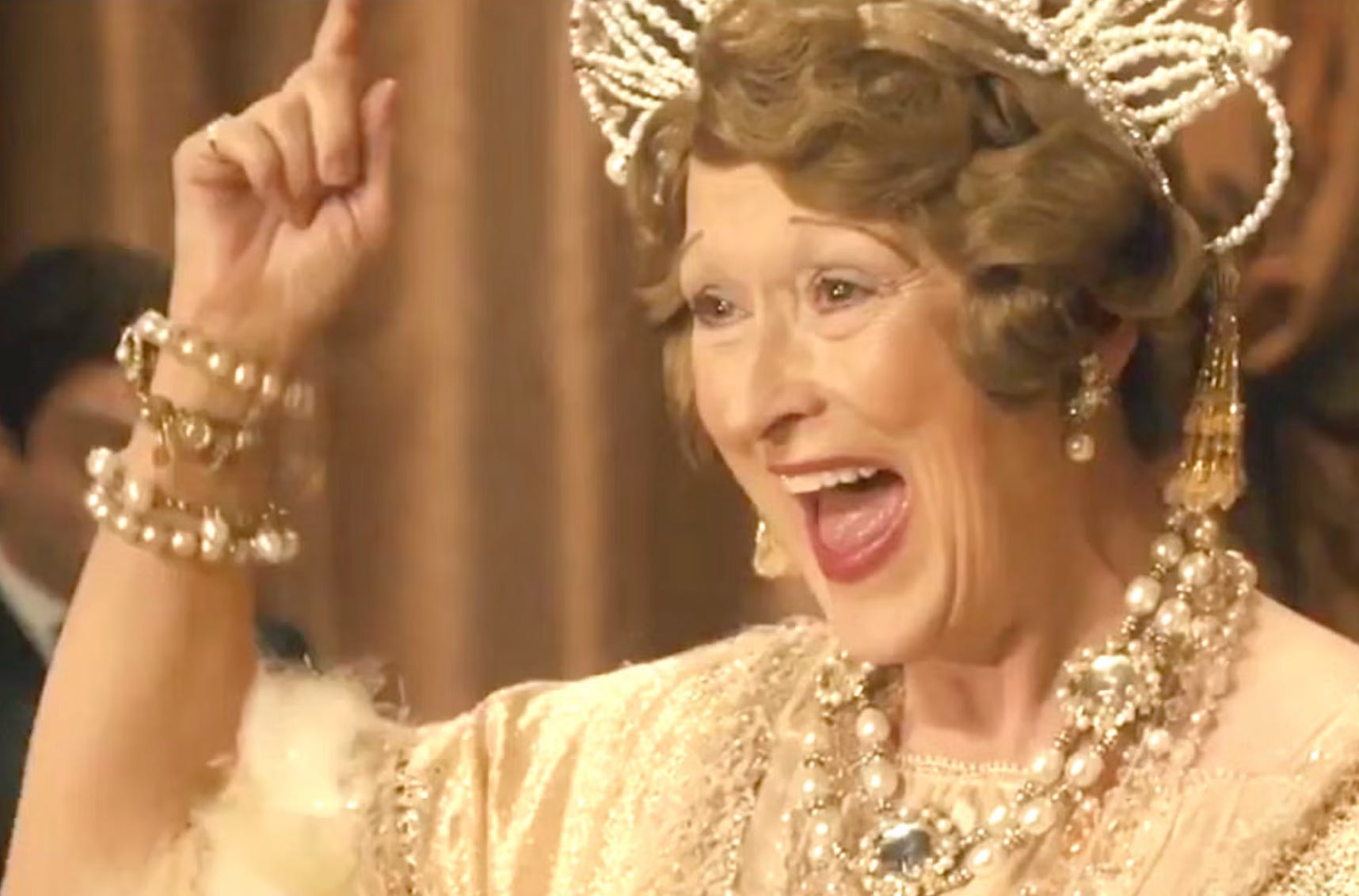
My idea of heaven is to sing in harmony with other voices. I mean this literally. Unfortunately I’m not one of those singers who can spontaneously find thirds and fifths. If I try to improvise, my voice hits like Florence Foster Jenkins’. I’m just not good at it, even when I practice.
The other factor keeping me from my harmonizing my heart out is that I’m not often in the company of people who will sing with me.
So I was excited to find on Instagram (and I’m sure there’s more on youtube) dozens if not hundreds of accounts tagged “Sing With Me.” The poster sings harmony and invites viewers to sing melody. No talent for harmonizing required, and you get to experience the joy of putting your voice in the company of another. It does seem a little sad to be singing with a stranger online, but it’s better than not singing at all.
Here’s a few of my favorites:
@theofficialdavide “Hey Jude”
@theeddiewang “Can’t Help Falling in Love With You”
*
If you enjoyed this issue of Restless Egg, please share with someone else who might enjoy it too! And if you haven’t yet subscribed—make my day!
Oh my gosh!!!!! The "Sing with Me" accounts!!!! I was having trouble doing my work today and now I can procrastinate even longer while singing songs with my new online besties!!! That is a riot! Kinda feels like having AI friendships but what the heck - as you said, "it's better than not singing at all". So entertaining! My weekend is now full.