
Issue #33
Lords a Leaping

Two Left Feet, No Problem
The 2023 New York Times headline was a meme waiting to happen: “Is the Cure for Male Loneliness Out on the Pickleball Court?” The creepy accompanying illustration clinched the deal. In the foreground, fat tears spill down the face of a mustachioed man as he watches a pickleball foursome frolic on a court lit by heavenly clouds. Meme versions feature the same illustration and half the headline: “Is the Cure for Male Loneliness a Third Computer Monitor?” “. . . Starting a Private Military Company With Your Friends?” “. . . Becoming a Competitive Brisket Smoker?” “. . . a Light Saber?” “. . . Sitting in Murfreesboro Traffic?”
To my mind the best variation on the meme is a video of six men in a field performing a traditional Morris dance. The men, dressed in white shirts and pants, wear flowered crowns and brown shin guards covered with little bells. They are not limber, not lithe, not young, not even rhythmically astute, but the dance they perform together is charming. Hopping and skedaddling in and out of their formations (so clever how two vertical lines transform into horizontal ones), they punctuate the music with a clacking of their long sticks. It looks fun. The caption over the video reads, “Guys I think I found the cure to male loneliness.”
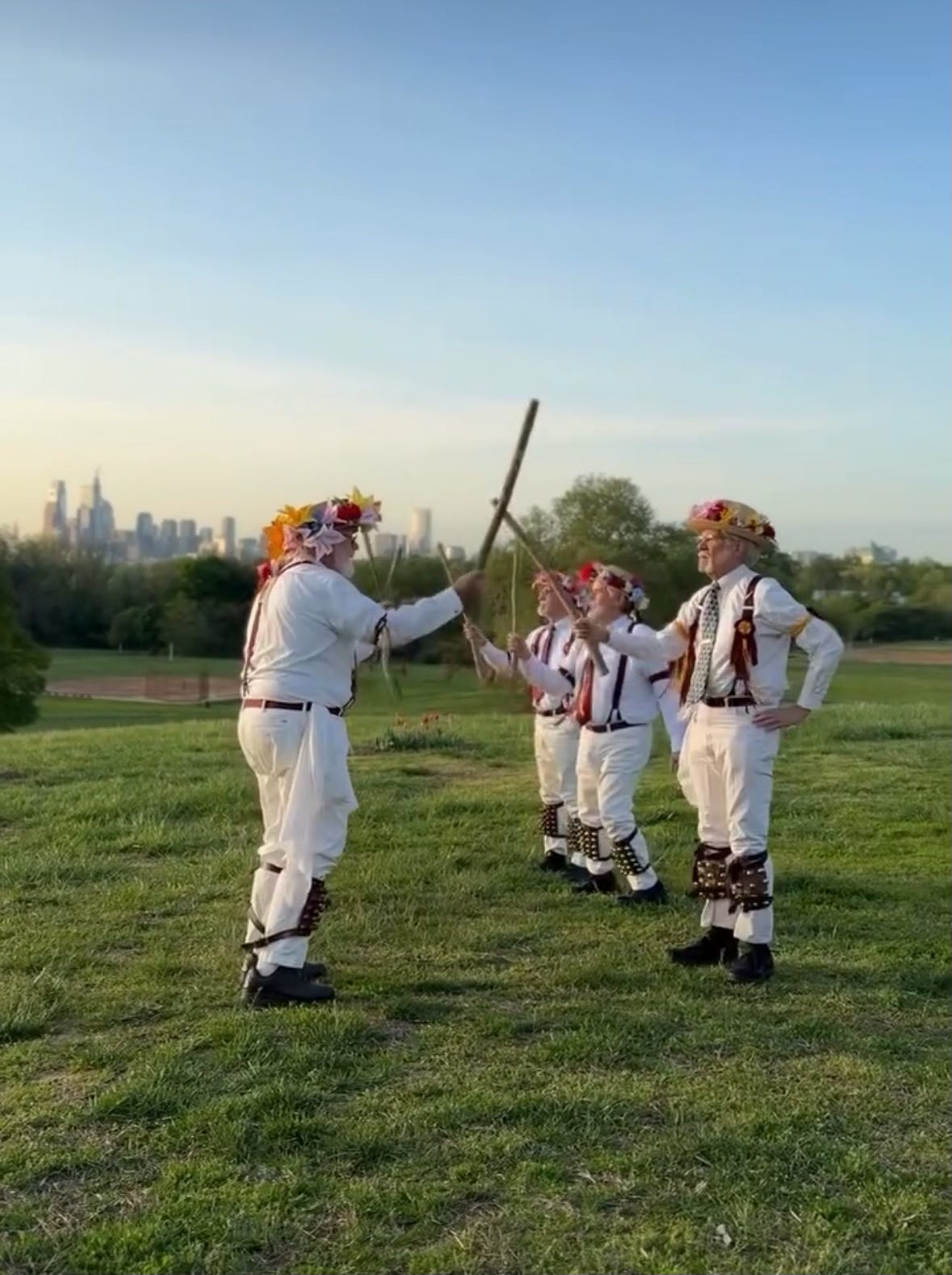
Yes, interstellar_isabellar, I think you have found the cure. If everyone would just listen. Men dressed in matching uniforms and silly headgear are bound to bond sure as bikers in a cycling club; and learning a choreography and performing as a group connects them not just to each other but to 500 years of men doing the same.
Much as I’d love to see hordes of men in every city park clacking and stomping their way towards brotherhood, the chances of Morris dancing taking off are nil. I’d offer my own cure for male loneliness (“Put Down Your Damn Phone and Get Off the Couch”) but I have no expertise on the subject and only a modicum of sympathy. Perhaps best to leave cures to meme writers and life coaches. But as long as you are here, expecting something after such a long introduction, I’ll tackle a related problem: MDR.
MDR, Male Dance Reluctance, gets less attention than Male Loneliness—but addressing it may have positive ripple effects, just as the oft-quoted “Make your bed everyday” may lead to improved self-esteem and the discovery of old socks.
Why are so many men unwilling to dance? Females, or most of them anyway, dance freely with other females from childhood on, first as little girls, moving wildly, then as teenaged friends learning the latest steps, and later as adults at weddings, dancing together in clumps because the men they came with huddle in far corners complaining of tinnitus and tight shoes.
Of course, MDR is not a universal problem, just as male loneliness isn’t. Many men—wonderful men!—do not require coercion or alcoholic lubrication to put their bodies in motion. These men move without inhibition, regardless of skill. Some of them can spin and waltz you into dance heaven; some are goofy; some like to form trains or limbo lines; some clear the floor with a signature move. A fair portion of the men in my family fit into this category. With the merest whisper of encouragement my brother Charlie throws down his belly dance; David, another brother, turns his taekwondo kicks into a funky routine; my nephew Danny adopts the posture of a rooster to set off his fancy footwork; young Peter will flip backwards upon request; Beau, some forty years after his first performance, still gets on the floor to breakdance. And should you put on some old Springsteen tunes, men on the other side of the family will flock to the dance floor like it was a pig roast, bringing with them their air microphones and air guitars and leaving behind their spouses.
But that leaves the rest of them, a big block who suffer from MDR and sit on the sidelines. My own designated dance partner is sometimes afflicted, other times more willing, going so far as to invent dances such as “Opening the Cookie Jar” and “Sorting the Mail.” After a recent flare-up of his MDR, I wanted an answer. Do you like to dance? I asked him. No, he said. Why? I’m not good at it, he said, I don’t like being the center of attention. That’s why I like ceili dancing, he added. You know where to go and what to do,
He's on to something.
For men who think they are too clumsy, too stiff, too shy of the spotlight, and too worried about embarrassing themselves to cut loose, I’m here to tell you, folk dancing is your ticket to Male Dance Freedom. Folk dancing gives direction and purpose. Stand there, move here, swing your partner, slap your knees, bang your stick! No improvising and no real dance ability required. Men dancing in traditional formations are a team, an army, a band of brothers not aggressive with each other, not competitive, not violent, not self-punishing. But utterly masculine all the same.
Take the Haka, for instance. My favorite. Dancers in squats stomp their feet, slap their chests, shout and stick out their tongues in moves long ago created to intimidate enemies, but these days performed to express unity and cultural pride. Or the Middle Eastern dabke. A line of men hold hands, sometimes shaking their shoulders, as the leader waves a white flag and freestyles. The rest follow with quick footwork. It’s skillful and joyful. And then there’s Russian Cossack dancing, the Greek Hasapiko, the Zulu Idlamu dance, and even the not-quite-folk-dancing Uncle Shuffle, a line dance performed by middle-aged and older Black men—I love it all. It's become a big part of my Instagram algorithm.
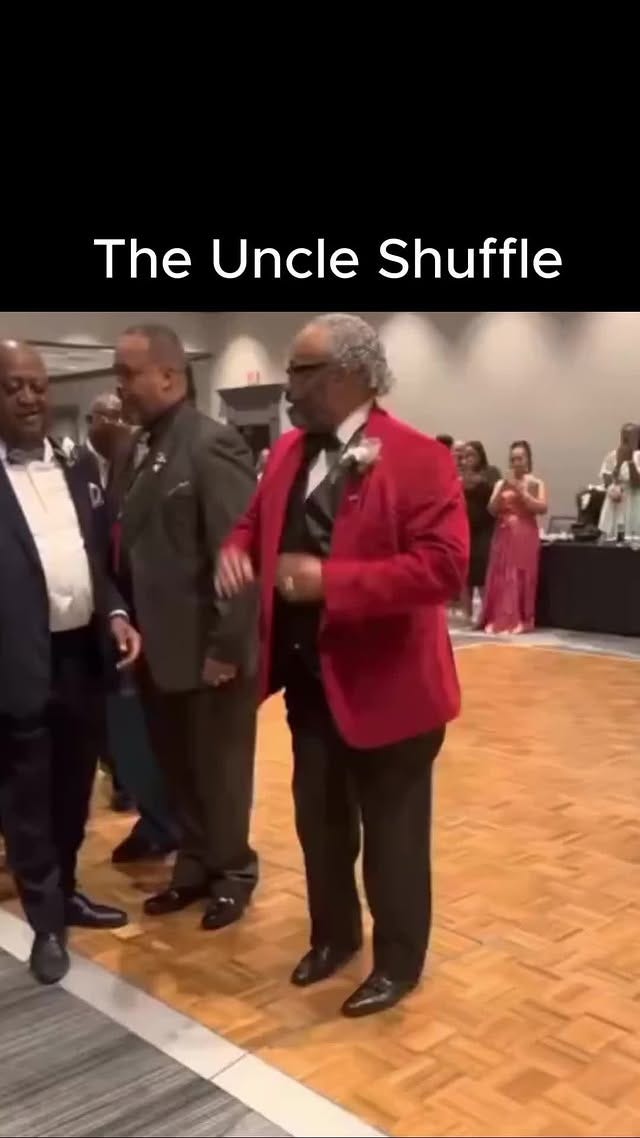
I only wish I could watch it IRL, not just online.
The closest I get to watching real world male folk dancing is the Hawaii 5-O tradition at our family weddings. As the theme to the old television show blares, all able-bodied and not-so-able bodied men sit on the floor in a line, knees up, straddling the person in front of them as if sitting in a canoe. They pretend to paddle, this side, then that side. They scoot forward as best they can. No matter how many times I’ve seen it, the dance is always exciting and always funny.
The paddlers are themselves excited, especially young nephews joining the line for the first time. Together they row onwards, the men who love to dance and the men who avoid it, a merry crew. When they finish forging a path across their imaginary river, they are out of breath and sore but beaming at their mission accomplished: creating delight, solidarity and tradition.
*
Fun Fact
MDR also stands for morte de rire, the French version of laughing out loud. Just in case you’re texting with a French person.
*
Dance Diplomacy
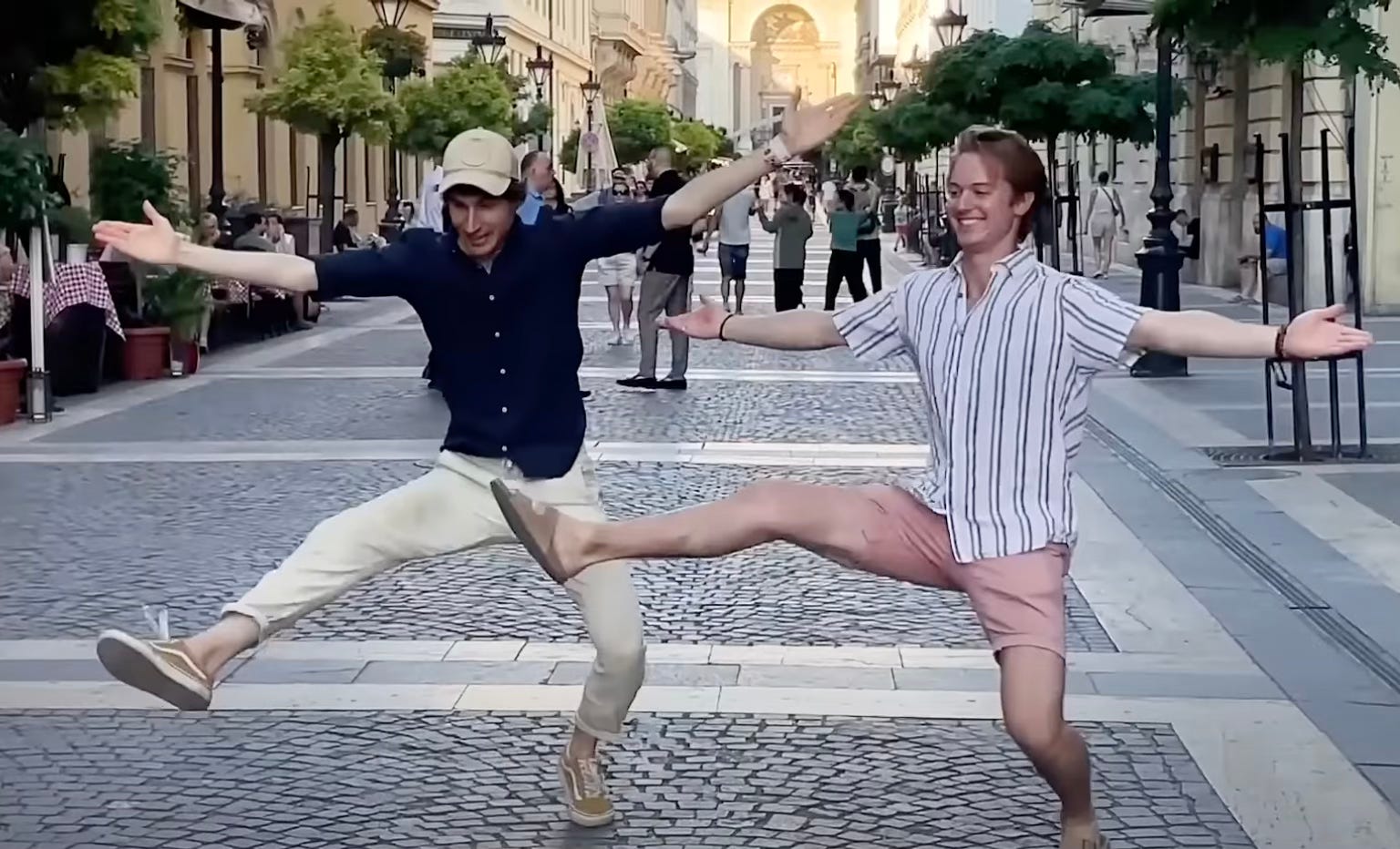
If you enjoy folk dancing, check out Ed People on Instagram. (The link is for a YouTube compilation; his Instagram account is ed.people.) He’s a lanky dancer from Belgium who travels the world learning local dances. “Teach Me Your Favorite Dance Move” is the name of the project. The clips are brief, the enthusiasm infectious. He’s a global ambassador as far as I’m concerned, not just of dance but of joy.
*
If you enjoyed this issue of Restless Egg, please share it with someone who might enjoy it too! I love to get new subscribers.
I can’t stop watching the Uncle Shuffle!